S32K144 vs S32K344: Migrating from S32K1 to S32K3
S32K144 vs S32K344: Cortex-M4F vs lockstep Cortex-M7, 512 KB vs 4 MB flash, CAN FD, Ethernet, HSE-B security, ASIL B vs D, and what changes when you migrate.
- NXP
- Automotive
- MCU
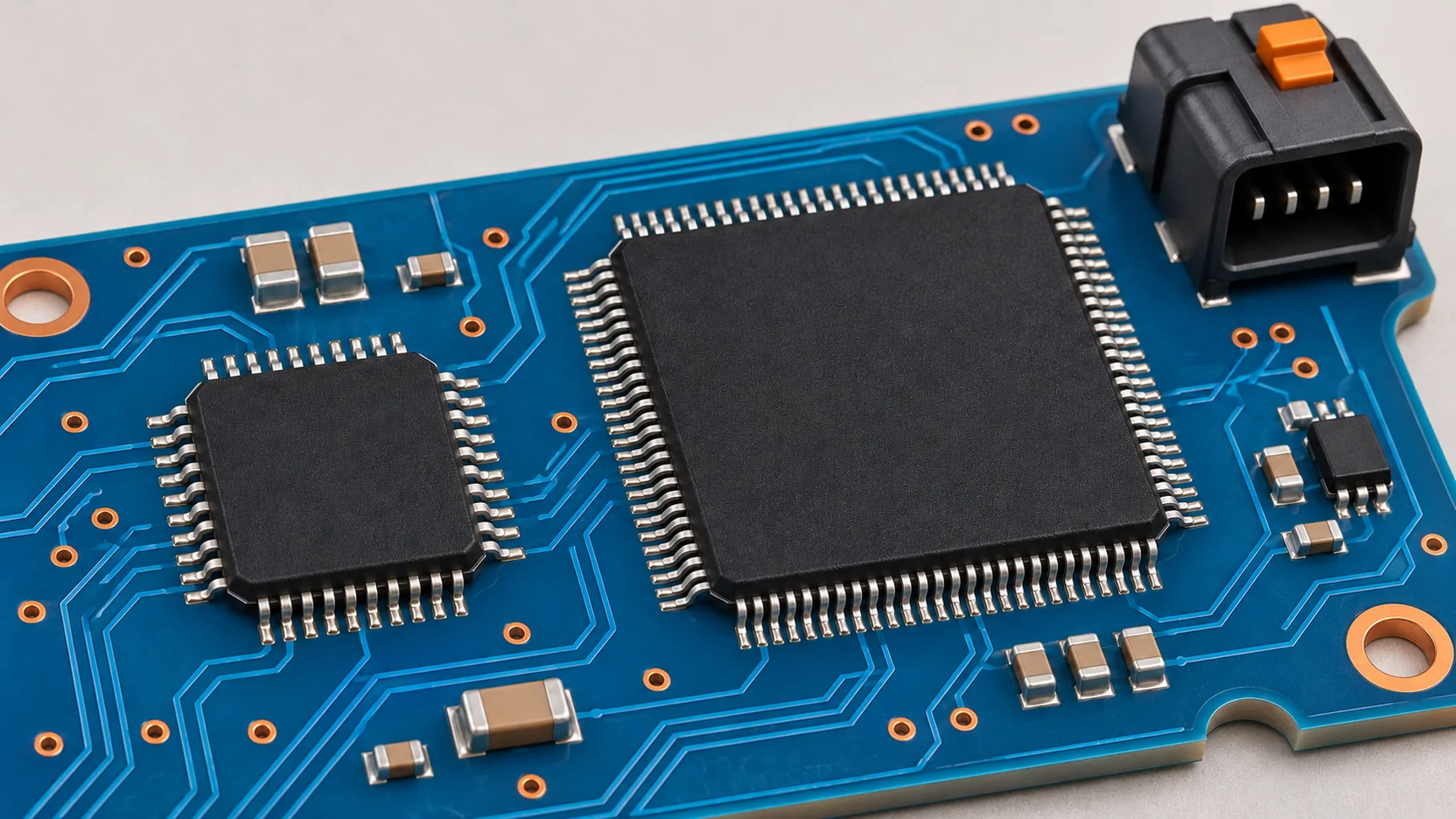
The NXP S32K144 has been a standard choice for body control, gateways and general automotive ECUs. Its successor family, the S32K3, moves to Arm Cortex-M7 cores, and the S32K344 is the usual step up for designs that need more performance or a higher safety level. This guide compares the two and covers what changes when you migrate.
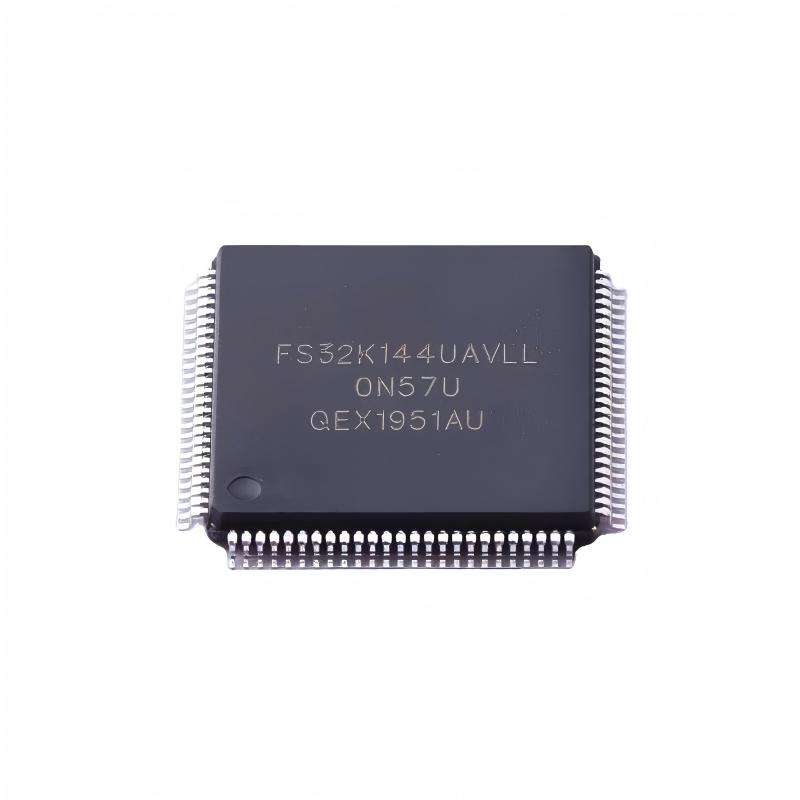
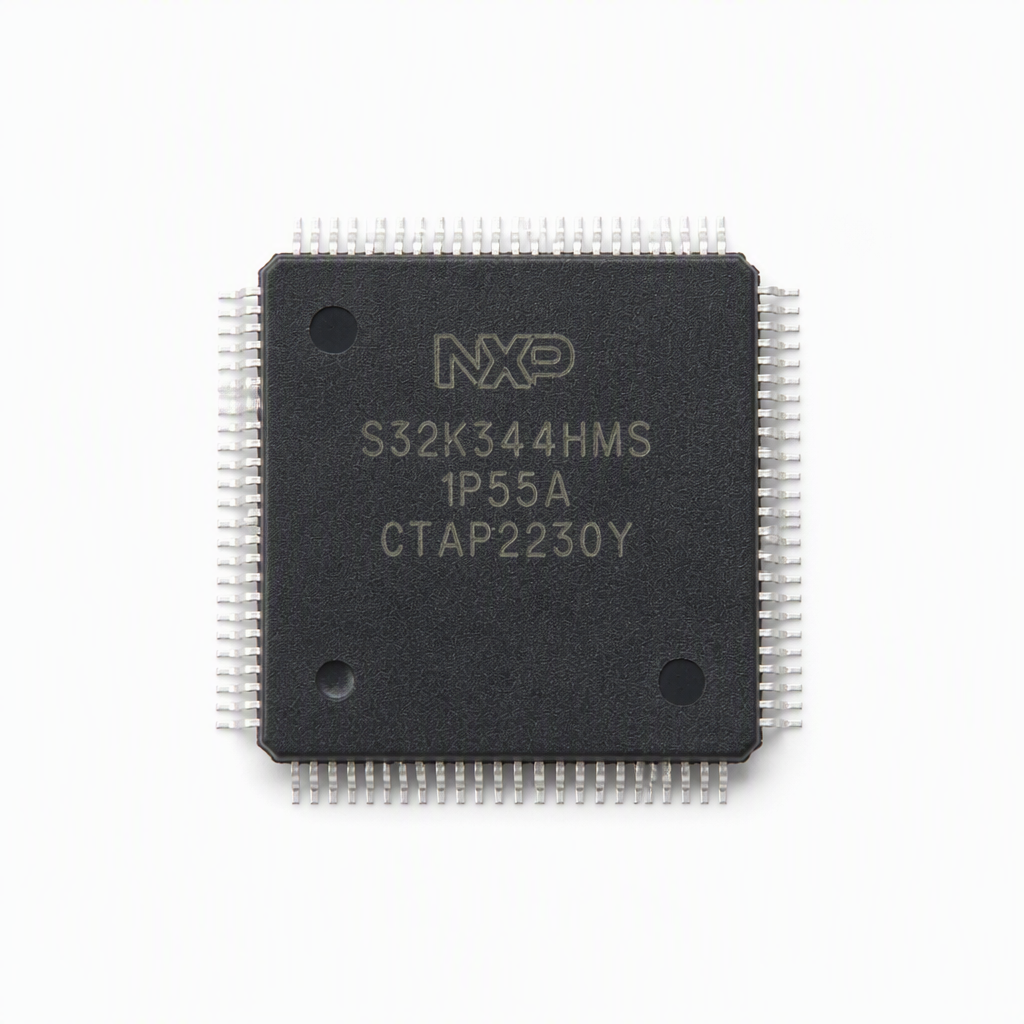
Short answer: the S32K144 is a Cortex-M4F MCU at 80 MHz (112 MHz in HSRUN on "U" speed-option codes) with 512 KB flash, 3 FlexCAN (one with CAN FD) and an ASIL B target. The S32K344 is a lockstep Cortex-M7 at 160 MHz with 4 MB flash, 512 KB SRAM, 6 CAN FD interfaces, the HSE-B security engine and ASIL D support. The two do not share a package, so moving from S32K144 to S32K344 means a new PCB layout and a firmware port.
Key Specifications Side by Side
| Parameter | S32K144 | S32K344 |
|---|---|---|
| Core | Arm Cortex-M4F | Arm Cortex-M7, lockstep |
| Max frequency | 80 MHz (112 MHz HSRUN on "U" speed-option codes) | 160 MHz |
| Program flash | 512 KB | 4 MB |
| RAM | 64 KB (incl. 4 KB FlexRAM) | 512 KB (incl. 192 KB TCM) |
| CAN | 3 × FlexCAN, 1 with CAN FD | 6 × CAN FD |
| Ethernet | No | 100 Mbit/s (TSN) |
| Security | CSEc (SHE-compliant) | HSE-B (AES, RSA, ECC, secure boot) |
| Functional safety | ASIL B | ASIL D |
| Supply | 2.7 V to 5.5 V | 2.97 V to 5.5 V |
| Packages | LQFP-64, LQFP-100, MAPBGA-100 | 172 HDQFP (MaxQFP), 257 MAPBGA |
| Typical OPN | FS32K144HFT0VLLT (LQFP-100) | S32K344NHT1VPBST (172 HDQFP) |
Figures are from NXP data sheets, the S32K3 family brochure and NXP product pages. Check the data sheet for your exact ordering code, because frequency, CAN FD and security options vary by part number.
Performance and Safety
The S32K144 runs at 80 MHz in normal RUN mode and up to 112 MHz in HSRUN mode, but HSRUN is limited to 105 °C ambient, and EEPROM or CSEc writes must be done in RUN mode. The S32K344 runs its lockstep Cortex-M7 at 160 MHz with 192 KB of tightly coupled memory, which gives a large step in processing headroom. The lockstep core is the main reason for the ASIL D support: if a project moves from ASIL B to ASIL D, the S32K344 is the natural candidate in the same vendor ecosystem.
Memory and Over-the-Air Updates
Flash grows from 512 KB to 4 MB and RAM from 64 KB to 512 KB. The S32K3 family supports read-while-write and A/B swap for firmware over-the-air (FOTA) updates, which is difficult to fit into 512 KB of flash. For gateways and zone controllers that need FOTA, this is often the deciding factor.
Connectivity and Security
The S32K144 offers three FlexCAN modules, one of them with CAN FD. The S32K344 offers six CAN FD interfaces and 100 Mbit/s Ethernet with TSN. Security moves from CSEc, a SHE-compliant engine, to HSE-B, which adds asymmetric cryptography (RSA and ECC), secure boot and key management aimed at ISO 21434 projects.
What Changes When You Migrate
- PCB layout: no shared package between S32K144 and S32K344, so the board must be redesigned.
- Firmware: new core, new peripheral set and a different security engine. Plan a port using NXP's real-time drivers rather than a recompile.
- Security keys and boot: CSEc key handling does not carry over to HSE-B; review the secure boot and key provisioning flow.
- CAN transceivers: with more CAN FD channels, check that the transceivers support the CAN FD data rate you plan to use, for example the TJA1463.
- Supply: confirm the lifecycle and lead time of the exact ordering code. NXP product pages listed a 39-week factory lead time for both FS32K144HFT0VLLT and S32K344NHT1VPBST in November 2026.
FAQ
Is the S32K344 pin-compatible with the S32K144?
No. The S32K144 comes in LQFP-64, LQFP-100 and MAPBGA-100; the S32K344 comes in 172 HDQFP and 257 MAPBGA. Migration needs a new layout.
Can I keep using the S32K144 in new designs?
Yes, NXP lists S32K144 ordering codes such as FS32K144HFT0VLLT as active. It remains a good fit for ASIL B nodes that do not need more memory or Ethernet.
What does "HFT0VLLT" mean in FS32K144HFT0VLLT?
The code identifies the feature options, temperature range and package. For this part NXP lists 80 MHz, CAN FD, FlexIO, 105 °C and LQFP-100. Check the NXP ordering information before substituting another suffix.
Which S32K3 part is closest to the S32K144?
For a similar safety level with more performance, the single-core S32K31x parts are entry points to the S32K3 family. Choose the S32K344 when you need ASIL D, 4 MB flash or Ethernet.
Summary
The S32K144 remains a solid ASIL B MCU for established designs. The S32K344 brings a lockstep Cortex-M7, eight times the flash, six CAN FD interfaces, Ethernet and HSE-B security, at the cost of a new layout and a firmware port. With long factory lead times on both, secure supply for the exact ordering code early.
Need S32K144 or S32K344 for production or a migration project? Request a quote or send your BOM and we will check availability for both.